Sin of Self-Sufficiency
All human self-sufficiency is sin and this principle can be seen throughout the Old and New Testaments.
Regulations for a King
Deuteronomy 17:16–17 (NASB95)
16 “Moreover, he shall not multiply horses for himself, nor shall he cause the people to return to Egypt to multiply horses, since the LORD has said to you, ‘You shall never again return that way.’
17 “He shall not multiply wives for himself, or else his heart will turn away; nor shall he greatly increase silver and gold for himself.
The king was not allowed to multiply horses for himself or multiply wives or greatly increase silver and gold for himself. These were all things that kings did in an act of self-sufficiency. They multiplied horses and chariots for gaining advantage in time of war. They multiplied silver and gold by the tons so they could hire help from other kings in time of war. They would multiply wives to increase the number of sons in an effort to increase chances of having some surviving sons to reign on the throne after them. Solomon broke all of these regulations and it was the multiplication of wives that sent him to hell after these pagan women turned his heart away from God and toward idols.
But the main point to consider here is the sin of self-sufficiency because these kings who multiplied all of these forbidden things were not depending on God for their help but rather depending on their own human self-sufficiency (which is a sin).
Judges 7:2–7 (NASB95)
2 The LORD said to Gideon, “The people who are with you are too many for Me to give Midian into their hands, for Israel would become boastful, saying, ‘My own power has delivered me.’
3 “Now therefore come, proclaim in the hearing of the people, saying, ‘Whoever is afraid and trembling, let him return and depart from Mount Gilead.’ ” So 22,000 people returned, but 10,000 remained.
4 Then the LORD said to Gideon, “The people are still too many; bring them down to the water and I will test them for you there. Therefore it shall be that he of whom I say to you, ‘This one shall go with you,’ he shall go with you; but everyone of whom I say to you, ‘This one shall not go with you,’ he shall not go.”
5 So he brought the people down to the water. And the LORD said to Gideon, “You shall separate everyone who laps the water with his tongue as a dog laps, as well as everyone who kneels to drink.”
6 Now the number of those who lapped, putting their hand to their mouth, was 300 men; but all the rest of the people kneeled to drink water.
7 The LORD said to Gideon, “I will deliver you with the 300 men who lapped and will give the Midianites into your hands; so let all the other people go, each man to his home.”
In this case God reduced the number of soldiers under the command of Gideon from 32,000 troops and down to only 300 left. This was about ten-times reduction in the number of soldiers. God clearly gave the reason for this reduction and said if He gave Israel the victory then these people would become arrogant and boastful and say that their own power had delivered them. By reducing the number to only three hundred – then it would be made obvious that God gave the victory rather than these soldiers because that number was impossibly small.
Again, it is made evident that God hates human self-sufficiency because people have an evil tendency take all of the glory to themselves and then falsely suppose that their own strength or their own human ability had saved them.
Luke 12:16–21 (NASB95)
16 And He told them a parable, saying, “The land of a rich man was very productive.
17 “And he began reasoning to himself, saying, ‘What shall I do, since I have no place to store my crops?’
18 “Then he said, ‘This is what I will do: I will tear down my barns and build larger ones, and there I will store all my grain and my goods.
19 ‘And I will say to my soul, “Soul, you have many goods laid up for many years to come; take your ease, eat, drink and be merry.” ’
20 “But God said to him, ‘You fool! This very night your soul is required of you; and now who will own what you have prepared?’
21 “So is the man who stores up treasure for himself, and is not rich toward God.”
The New Testament also confirms the same principle found in the Old Testament. Jesus gave a parable and said that a rich man was planning to tear down his barns and build bigger ones to store all of his wealth. This guy falsely supposed that he would have goods laid up for many years so he could enjoy life and take his ease and eat and drink and be merry. But God called the man a fool because his soul would be required of him that very night and all of his human preparations on earth would be in vain because he could take nothing with him when he died.
A key point to see here is that this rich man was self-sufficient and falsely imagined that he had no need of anything (including God). This is the sin of self-sufficiency that sends these rich men to hell.
But it should also be noted that there were many righteous rich men in the bible including Abraham and Isaac and Jacob and King Hezekiah and King David and many more who all went to heaven. It is not possessing wealth that sends people to hell but rather it is the sin of self-sufficiency which sends people to hell.
Manmade False Religions
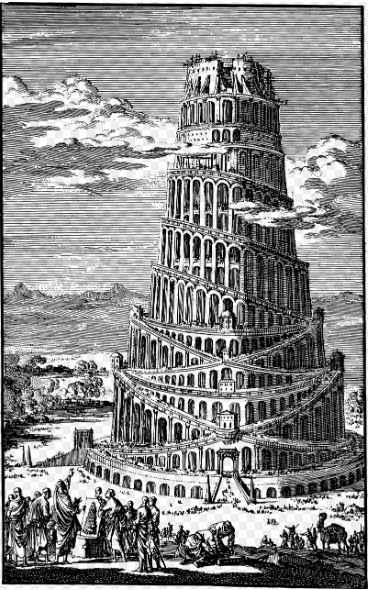
Genesis 11:3–4 (NASB95)
3 They said to one another, “Come, let us make bricks and burn them thoroughly.” And they used brick for stone, and they used tar for mortar.
4 They said, “Come, let us build for ourselves a city, and a tower whose top will reach into heaven, and let us make for ourselves a name, otherwise we will be scattered abroad over the face of the whole earth.”
The tower of Babel was made of hundreds of millions of earthen bricks. These bricks were made of earth just as the first man Adam was also made of dust of the earth. Therefore the earthen bricks represent man-made objects or man-made religion. This tower was designed to reach into the heavens and represents mankind’s attempts to attain salvation (enter heaven) without God’s help. The hundreds of millions of bricks are symbolic of the hundreds of millions of false religions invented by mankind over the centuries and until now there are new false religions invented every day.
Religion a Product of Human Self-Sufficiency
The sin of the people of the tower of Babel was the sin of self-sufficiency. It is as if they falsely imagined that they could earn their own salvation and make their own way to reach heaven (apart from the only way God has provided by the sacrifice of his Son Jesus). There are hundreds of millions of false religions currently on earth and new false religions are created every day. The sin of false religion is the human self-sufficiency of not complying with the only means of salvation given by God through Christ. Instead they set about to earn their own salvation by human good deeds and religious works and acts of human self-righteousness.
Human Good Works and Good Deeds to Achieve Self-Righteousness
The account of Cain and Able speaks of the contrast of human self-effort compared to submission to God’s prescribed way.
Genesis 4:3–5 (NKJV)
3 And in the process of time it came to pass that Cain brought an offering of the fruit of the ground to the LORD.
4 Abel also brought of the firstborn of his flock and of their fat. And the LORD respected Abel and his offering,
5 but He did not respect Cain and his offering. And Cain was very angry, and his countenance fell.
Cain made an offering to God comprised of produce of the field or vegetables and grain. But this type of offering does not contain any blood so it is not acceptable for the purpose of making atonement for sin. Abel his brother however brought the firstborn of his flock and their fat (indicating they were sacrificed to the Lord. The offering of Abel contained blood for atonement and his offering was accepted by God but Cain’s bloodless offering was rejected by God.
Hebrews 9:22 (NASB95)
22 And according to the Law, one may almost say, all things are cleansed with blood, and without shedding of blood there is no forgiveness.
Without the shedding of blood there is no forgiveness of sins and the animal sacrifice of the Old Testament era pointed toward Christ who would come and offer his own blood once and for all for the sacrifice for sins of all humanity of all generations.
Hebrews 10:11 (NASB95)
11 Every priest stands daily ministering and offering time after time the same sacrifices, which can never take away sins;
Animal sacrifices of the Old Testament could never take away the sins of humans but they only pointed toward the ultimate sacrifice of Jesus shedding his own blood for the sins of all humanity.
Hebrews 10:14 (NASB95)
14 For by one offering He has perfected for all time those who are sanctified.
Jesus made one perfect sacrifice of his own blood for all humanity and perfected salvation for all.
But Cain was angry that he own self-effort of laboring under the sun to produce a crop was not acceptable. Cain could not earn his salvation by his own self-effort and therefore he got angry. This is the essence of all false religion when humans set about to labor to earn their own salvation by human self-effort while ignoring the free gift of eternal life made available to all humanity by Jesus to whoever would call upon his Name to be saved.
Romans 10:13 (NKJV)
13 For “whoever calls on the name of the LORD shall be saved.”
False religion is rooted in human self-effort and human good deeds to earn their own salvation apart from the free gift of eternal life. This is great arrogance that they reject the free gift of eternal life provided for them in order to pursue their own religious system of self-effort and set about to earn their own salvation by works.
Tree of Knowledge of Human Good and Human Evil
Genesis 2:15–17 (NASB95)
15 Then the LORD God took the man and put him into the garden of Eden to cultivate it and keep it.
16 The LORD God commanded the man, saying, “From any tree of the garden you may eat freely;
17 but from the tree of the knowledge of good and evil you shall not eat, for in the day that you eat from it you will surely die.”
The tree of the knowledge of good and evil speaks of human good and human evil. Human good actually sends more people to hell because these people bolster their own human self-righteousness by doing human good deeds like engaging in religious rituals or giving to charity or giving to religious good works or other social programs. Some people even falsely imagine that caring for stray cats and dogs (is something they can do to earn righteousness for themselves) to be a good human. But all human good works will send them to hell because these things are all rooted in human self-righteousness – which causes them to grow arrogant and falsely assume they have no need of salvation through Christ. Bolstering human self-righteousness causes these deceived people to view themselves as being “already good” by their own good deeds or good by keeping religious rituals within one of the various false religions on earth.
Again, the main principle to see in all of this is the sin of human “self-sufficiency” – which also carries over into false religion and causes humans to try to earn their own salvation by works of human self-effort.
Hell the Place of the Rich Men (Self-Sufficient)
Isaiah 53:9 (NIV84)
9 He was assigned a grave with the wicked, and with the rich in his death, though he had done no violence, nor was any deceit in his mouth.
The scripture was botched up by many modern translations and commentaries who say that the Messiah was with a rich man in his death and then add commentary that the body of Jesus was laid in a tomb owned by a rich man after his body was removed from the cross. However, these people miss the clear biblical principle that is revealed throughout both the Old and New Testament. The fact of the matter is that this scripture is speaking of Christ going into the center of the earth to suffer the punishment intended for all sinful humans. The place of hell is referred to here as the place of the rich. But this would be better translated to say that Christ went to the hell – (which is the place of self-sufficient humans) who vainly imagined they had no need of Christ and so pursued salvation by one of the many manmade false religions on earth.
The biblical principle to be seen here is that it is the sin of self-sufficiency that sends humans to hell. God provided salvation freely for anyone who calls upon the name of the Lord to be saved. But if they refuse to submit to God’s salvation they will end up in hell because of their own human self-sufficiency – which is rooted in human self-righteousness. This is all part of the fall of Adam and is derived from the tree of the knowledge of good and evil – which poisoned the minds of all humans ever since the fall of Adam and Eve in the garden of Eden.
So, humans have a sin nature to deal with even as believers and there is an evil tendency within all humans which wants to pull them away from dependence upon God and toward hell (the final abode for all self-sufficient humans).
Sabbath Day Principle – Cease from Human Self-Effort
In fact, this same principle can be seen also be seen in the Sabbath Day principle where men are required to do their part for six days a week and then rest in God on the seventh day. Men were to plow and plant and cultivate and harvest but it is God who provides the sunshine and rain and protection against plant disease and insect plagues and hail storms and everything that can destroy crops. They are resting in God by faith to do his part – after they did their part as humans.
Tithing -Depending On God For Their Prosperity
The same principle is also seen in the tithe because God allows them to keep 90% for themselves but only requires 10% back. This means they can keep 9 out of every ten livestock and 9 out of 10 bushels of grain and 9 out of 10 dollars etc. But giving one tenth part back to God shows that they acknowledge that everything they have was given to them by God’s grace. Tithing shows that they are depending on the Lord for all of their income.
Both the Sabbath day and the tithe takes humans out of self-sufficiency and places them in faith as they trust God for the increase.
1 Corinthians 3:5–7 (NKJV)
5 Who then is Paul, and who is Apollos, but ministers through whom you believed, as the Lord gave to each one?
6 I planted, Apollos watered, but God gave the increase.
7 So then neither he who plants is anything, nor he who waters, but God who gives the increase.
This applies also to farming or any business because God will give the increase after the farmer does his part to plow and plant and cultivate or harvest or any business activity involved in being a producer. It is God who gives the increase and paying a tithe acknowledges that God was the one who blessed them. Therefore, the income was not derived by human self-effort alone.
Genesis 24:35 (NKJV)
35 The LORD has blessed my master greatly, and he has become great; and He has given him flocks and herds, silver and gold, male and female servants, and camels and donkeys.
Abraham was blessed by the Lord as was also all of the Jewish Patriarchs who grew wealthy by the blessing of God upon their lives. But the Jews also learned to pay a tithe to the Lord to honor God out of their increase.
Genesis 28:22 (NKJV)
22 And this stone which I have set as a pillar shall be God’s house, and of all that You give me I will surely give a tenth to You.”
Today the Jewish people still honor God with paying a tenth of their increase and they also take one day a week off from labor to rest in God by faith. It is no wonder that the Jewish people hold 67% of the Fortune 500 companies in America (the top 500 most prosperous companies) but the Jews make up only 3% of the US population. This is a disproportionate number of prosperous Jewish people considering their small population – that is mostly found in NYC.
Again, the principle to see here is that the Jewish tithe and Jewish Sabbath speak of relying on God for increase and honoring God with their increase to worship God because all they have was given by God’s blessing upon their lives and businesses.
In contrast there are Gentile businessmen who labor seven days a week trying to pursue wealth. But they are not blessed like the Jews who labor only for six days a week. The difference is that the Jews are not forgetting God – while the greedy secular businessman is totally given over to human self-sufficiency and self-effort to get ahead. Such greedy and godless men do not tithe and do not take off a day to rest in God by faith. They vainly imagine they can earn it themselves and that is why their wealth is not lasting and many of them go broke.
God’s Blessing Results in Increase of Prosperity
Genesis 26:12–14 (NKJV)
12 Then Isaac sowed in that land, and reaped in the same year a hundredfold; and the LORD blessed him.
13 The man began to prosper, and continued prospering until he became very prosperous;
14 for he had possessions of flocks and possessions of herds and a great number of servants. So the Philistines envied him.
It is interesting that Isaac sowed in the land of the Philistines and God prospered Isaac and he had a hundred-fold increase and continued to increase every year. Isaac became so wealthy by God’s blessing that even the Philistines envied him. The Philistines were not prospering within their own land but Isaac was prospering in the same land. The difference was that Isaac was applying Jewish principles taught to him by his father Abraham (who received this knowledge from God). Later this knowledge was recorded by Moses in what is now called the Jewish Torah or what is now the Old Testament of the Christian bible.
But the main point is that humans are not to become self-sufficient and forget God. They were work with God to receive God’s blessing. The sabbath day was given to rest in faith and the tithe was given to honor God. Both were a means to get out of human self-sufficiency and to depend on God by faith. This is what distinguished God’s people from the pagans who were trying to get wealthy by human self-effort alone and these unbelievers continued to come to nothing by the curse and misfortune (which comes upon those who are self-sufficient and forget God).
I personally know of people who became self-sufficient and were just enjoying life and pursuing hobbies and interests and they all had their lives cut short. This gets into the topic of “Lordship” because we are no longer free to do what we want and we cannot go where we want or marry who we want or live where we want. There is an ordained placed of God for each of us and if we leave that ordained place then we will have a curse.
Lordship means we are the sheep and Jesus is the shepherd and we must not go astray but instead submit our human freewill to the Lord and do only what he commands us to do. So again, the analogy of a sheep gone astray from the Good Shepherd gets back into human self-sufficiency again. A stray sheep does not want to follow the shepherd but wants to go their own way.
Isaiah 53:6 (NKJV)
6 All we like sheep have gone astray; We have turned, every one, to his own way; And the LORD has laid on Him the iniquity of us all.
All of us who were going away from the Lord are like sheep gone astray – who turned toward their own way. Such people will become like a sheep lost in a forest full of wolves and inevitable that they will soon be devoured. Each believer must remain in God’s ordained place and be married to their ordained mate and do only what God has ordained for them. If they leave their ordained place they will suffer shipwreck.
The stray sheep analogy again speaks of human self-sufficiency as people vainly believe that they have no need of God’s guidance and that they can live their own lives and make their own decisions.
Again, it must be noted that hell is the place of self-sufficient humans who falsely believed they have no need of God and could live their own lives or earn their own salvation by human self-effort. The sin of the rich man in the parable given by Jesus was the sin of self-sufficiency as he declared that he has many goods laid up for many years and has no need of anything (including God). But all that wealth did not mean anything when that same rich guy died and went to hell. Hell is the place of the rich men who were indulging in the sin of human self-sufficiency.
Matthew 18:2–4 (NKJV)
2 Then Jesus called a little child to Him, set him in the midst of them,
3 and said, “Assuredly, I say to you, unless you are converted and become as little children, you will by no means enter the kingdom of heaven.
4 Therefore whoever humbles himself as this little child is the greatest in the kingdom of heaven.
The principle of human self-sufficiency continues under the New Testament as well because Jesus said that unless they be converted from being self-sufficient humans (and become like little children) then they will not enter the kingdom of heaven. Little children are totally dependent upon their parents for provision and protection. If their parents do not feed them then they will go hungry because they unable to provide for themselves. So, this is a good illustration of what it means to become like little children who are totally dependent upon the Lord. Jesus said that the adult believers were to become converted from being self-sufficient and instead become totally dependent upon the Lord by faith. Jesus made it clear that unless they become like little children, they would not enter the kingdom of heaven. This means all self-sufficient people will end up in hell (the place of the “self-sufficient” people) who falsely imagine they have no need of anything -including God to save them.
Matthew 5:3 (NASB95)
3 “Blessed are the poor in spirit, for theirs is the kingdom of heaven.
Being poor in spirit is the exact opposite of being rich in spirit. Again, hell was called the place of the rich (those who imagine they have need of nothing because they are self-sufficient within themselves). To be poor in spirit is to be humbled and emptied of all human self-sufficiency thus making themselves like little children who depend entirely on their parents to care for and feed them. So they are to depend totally on God for everything and not rely on human self-sufficiency.
Proverbs 3:5–6 (NKJV)
5 Trust in the LORD with all your heart, And lean not on your own understanding;
6 In all your ways acknowledge Him, And He shall direct your paths.
Believers are not to depend on their own human understanding but in all their ways they are to acknowledge God and God will guide them in the way they are to go and God will direct their paths.
Proverbs 23:4 (NIV)
4 Do not wear yourself out to get rich; do not trust your own cleverness.
Believers are not to wear themselves out laboring in human self-effort to get rich. They are also not to trust in their own human cleverness to get wealth. Instead they are to trust in the Lord for their financial increase.
Proverbs 28:26 (NIV)
26 Those who trust in themselves are fools, but those who walk in wisdom are kept safe.
Those who trust in themselves are fools because this is the sin of human self-sufficiency and will result in their own downfall. But those who walk in the wisdom of God’s word will be made prosperous by God’s blessing upon their lives.
Psalm 119:1 (NIV)
1 Blessed are those whose ways are blameless, who walk according to the law of the LORD.
Those whose ways are blameless and walk according to God’s laws will incur God’s favor and blessing upon their lives. This is why a revival causes an increase of prosperity when many thousands of people turn to God and obey his commandments and bring blessing to an entire nation.
Depending Upon the Lord Completely
Psalm 131:2–3 (NASB95)
2 Surely I have composed and quieted my soul; Like a weaned child rests against his mother, My soul is like a weaned child within me.
3 O Israel, hope in the LORD From this time forth and forever.
King David also used the illustration of a child who was weaned and had to rest against his mother and trust that she would feed him at the proper time and season. Those who trust in the Lord were to be like weaned children who wait for the Lord to take care of them and not depend on their own human self-sufficiency to meet their own needs.
Revelation 3:14–19 (NASB95)
14 “To the angel of the church in Laodicea write: The Amen, the faithful and true Witness, the Beginning of the creation of God, says this:
15 ‘I know your deeds, that you are neither cold nor hot; I wish that you were cold or hot.
16 ‘So because you are lukewarm, and neither hot nor cold, I will spit you out of My mouth.
17 ‘Because you say, “I am rich, and have become wealthy, and have need of nothing,” and you do not know that you are wretched and miserable and poor and blind and naked,
18 I advise you to buy from Me gold refined by fire so that you may become rich, and white garments so that you may clothe yourself, and that the shame of your nakedness will not be revealed; and eye salve to anoint your eyes so that you may see.
19 ‘Those whom I love, I reprove and discipline; therefore be zealous and repent.
The believers of the Church of Laodicea were spiritually dull and thought they were rich and became wealthy and had no need of anything. These people had become “self-sufficient” in their own self-righteousness. But because of their sin of human self-sufficiency, they were blind to their real condition. Jesus said that they did not know they were wretched and miserable and poor and blind and naked. They were helpless but were not even aware of it because they were blinded by their own human self-sufficiency.
In order for someone to come to God, they must humble themselves in total dependence upon the Lord like a little child. They are to depend totally on the Lord and never on human self-sufficiency. To become poor in spirit was to become humble and teachable and totally reliant upon the Lord to take care of them and guide them in everything they do.
Those who are not poor in spirit are those who vainly imagine they have no need of God. King Saul was like this and did whatever he wanted without asking God for direction. This is why Saul was removed from being king and replaced by David (who was totally dependent upon the Lord for everything). Saul was self-sufficient and David was poor-in-spirit and depended upon the Lord for everything.
1 John 4:4 (NASB95)
4 You are from God, little children, and have overcome them; because greater is He who is in you than he who is in the world.
The New Testament often refers to the believers as “little children” because that was the goal of the early church members to empty themselves of all human self-sufficiency and humble themselves as little children which are totally dependent upon the Lord. This is what it means to be “poor in spirit” because those who are poor in spirit are emptied of the human sin nature of self-sufficiency and depend only on the Lord. This is what it means to be converted as little children and be totally depending upon the Lord by faith.
1 John 4:4 (NASB95)
4 You are from God, little children, and have overcome them; because greater is He who is in you than he who is in the world.
It is important for fathers to provide their children with good instruction and discipline of the Lord. Natural instruction is important so they can take care of themselves later as adults. However, together with teaching them skills to make a living and provide for their own future family – it is important that this knowledge be tempered together with instruction about how to keep themselves dependent upon the Lord. They have to humble themselves as little children and not depend on their own human self-sufficiency.
This is also part of the doctrine of lordship because they cannot do whatever they want or go wherever they want but they must find God’s ordained place and do only what God has called them to do. If they leave their ordained place they will end up in shipwreck and be destroyed. God has an ordained place for each person and they must remain where God plants them. In the beginning they will have to define where their ordained place is and once, they found it – then they must remain faithful in that one place and not be moved.
When raising sons, it is largely involved with observing where their gifts and talents lie. These things can give clues as to what their gift and purpose of God is all about. After they leave home however, they will have to learn to hear the voice of God by the inward witness and discern where God wants them to go and what it is that they are supposed to do.
God has a specific purpose for their lives and a specific place to live and a specific spouse to marry. They will often define their way as they move forward and as various doors of opportunity present themselves before them. But once they found their place and have become expert in their field – then the excitement is largely over. They will then have to become faithful where God placed them and do not move even if they are bored. Being an expert in any field can become boring because they can almost do their job with their eyes closed and operate by muscle memory only. There have been many people who have shipwrecked when they left their ordained place out of boredom and ended up out of God’s will. They must remain in God’s ordained place for them once they have found that ordained place. There is nothing left but for them to be faithful where God has planted them. From that time forward they should raise children and give them direction and preparation so they will be trained and ready to fulfill their own future roles as well.
Numbering Fighting Men is Sin of Self-Sufficiency
1 Chronicles 21:1–2 (NASB95)
1 Then Satan stood up against Israel and moved David to number Israel.
2 So David said to Joab and to the princes of the people, “Go, number Israel from Beersheba even to Dan, and bring me word that I may know their number.”
Satan is called the accuser and he will typically tempt men to sin against God and then heap condemnation upon them for sinning. Often this sin will result in judgment so Satan is able to accomplish his purposes (of killing and stealing and destroying) by causing men to sin then having them destroyed by judgment.
1 Chronicles 21:3–6 (NASB95)
3 Joab said, “May the LORD add to His people a hundred times as many as they are! But, my lord the king, are they not all my lord’s servants? Why does my lord seek this thing? Why should he be a cause of guilt to Israel?”
4 Nevertheless, the king’s word prevailed against Joab. Therefore, Joab departed and went throughout all Israel, and came to Jerusalem.
5 Joab gave the number of the census of all the people to David. And all Israel were 1,100,000 men who drew the sword; and Judah was 470,000 men who drew the sword.
6 But he did not number Levi and Benjamin among them, for the king’s command was abhorrent to Joab.
Numbering Israel in order to know the number of fighting men is the sin of human self-sufficiency. The totals that Joab provided for the king revealed the number of fighting men (those who drew the sword) in both Israel and Judah. The reason for a king to take such a census was not to serve the people better but rather to know the number so he could decide how powerful he was as a military might.
Luke 14:31–32 (NASB95)
31 “Or what king, when he sets out to meet another king in battle, will not first sit down and consider whether he is strong enough with ten thousand men to encounter the one coming against him with twenty thousand?
32 “Or else, while the other is still far away, he sends a delegation and asks for terms of peace.
Jesus also spoke of how a king with 10,000 soldiers will calculate if he is able to meet and enemy force coming against him with 20,000 soldiers. If he does not think he can defeat the enemy then he will ask for terms of peace before the battle begins. This is the reason that worldly kings would number their fighting men so they could calculate if they thought they might be able to win in battle against opposing forces. Numbering the fighting men is therefore the sin of human self-sufficiency and it was for this sin that judgment came upon all Israel.
1 Chronicles 21:7–13 (NASB95)
7 God was displeased with this thing, so He struck Israel.
8 David said to God, “I have sinned greatly, in that I have done this thing. But now, please take away the iniquity of Your servant, for I have done very foolishly.”
9 The LORD spoke to Gad, David’s seer, saying,
10 “Go and speak to David, saying, ‘Thus says the LORD, “I offer you three things; choose for yourself one of them, which I will do to you.” ’ ”
11 So Gad came to David and said to him, “Thus says the LORD, ‘Take for yourself
12 either three years of famine, or three months to be swept away before your foes, while the sword of your enemies overtakes you, or else three days of the sword of the LORD, even pestilence in the land, and the angel of the LORD destroying throughout all the territory of Israel.’ Now, therefore, consider what answer I shall return to Him who sent me.”
13 David said to Gad, “I am in great distress; please let me fall into the hand of the LORD, for His mercies are very great. But do not let me fall into the hand of man.”
It was due to this sin of self-sufficiency by King David – that God struck the entire nation of Israel with judgment.
1 Chronicles 21:14–18 (NASB95)
14 So the LORD sent a pestilence on Israel; 70,000 men of Israel fell.
15 And God sent an angel to Jerusalem to destroy it; but as he was about to destroy it, the LORD saw and was sorry over the calamity, and said to the destroying angel, “It is enough; now relax your hand.” And the angel of the LORD was standing by the threshing floor of Ornan the Jebusite.
16 Then David lifted up his eyes and saw the angel of the LORD standing between earth and heaven, with his drawn sword in his hand stretched out over Jerusalem. Then David and the elders, covered with sackcloth, fell on their faces.
17 David said to God, “Is it not I who commanded to count the people? Indeed, I am the one who has sinned and done very wickedly, but these sheep, what have they done? O LORD my God, please let Your hand be against me and my father’s household, but not against Your people that they should be plagued.”
18 Then the angel of the LORD commanded Gad to say to David, that David should go up and build an altar to the LORD on the threshing floor of Ornan the Jebusite.
Over 70,000 men of Israel died in a plague and the angel of the Lord came to Jerusalem with outstretched sword to destroy it also. But the prophet Gad told David to build and altar to the Lord to make atonement for his sin of numbering the people.
1 Chronicles 21:26–28 (NASB95)
26 Then David built an altar to the LORD there and offered burnt offerings and peace offerings. And he called to the LORD and He answered him with fire from heaven on the altar of burnt offering.
27 The LORD commanded the angel, and he put his sword back in its sheath.
28 At that time, when David saw that the LORD had answered him on the threshing floor of Ornan the Jebusite, he offered sacrifice there.
It was this location at the former threshing floor of Oran the Jebusite that was chosen by God as a place to make atonement for sin. This is where they built the first Jewish temple in the time of King Solomon. It forever speaks of making atonement for the sin of mankind and diverting judgment which all points toward Christ and his sacrificial gift of himself to take the sin and judgment for all humanity. This altar location therefore speaks of making atonement for the sin of self-sufficiency and this relates to all human sin until present times.
The sin of self-sufficiency is the prevalent sin that sends people to hell. All false religions on earth are all a product of human self-sufficiency as people seek to invent their own futile ways of salvation – rather than submitting to the only way of salvation as is provided through the atoning work of Christ.
Acts 4:12 (NASB95)
12 “And there is salvation in no one else; for there is no other name under heaven that has been given among men by which we must be saved.”
There is no other way of salvation other than the Name of Jesus. There is no other way of salvation on earth given among men except salvation through Jesus Christ (who paid for the sin of the whole world by the sacrifice of himself on the behalf of sinful mankind).
Tower of Babel Represents Manmade False Religions
The multitude of false religions on earth is exemplified by the tower of Babel.
Genesis 11:4 (NASB95)
4 They said, “Come, let us build for ourselves a city, and a tower whose top will reach into heaven, and let us make for ourselves a name, otherwise we will be scattered abroad over the face of the whole earth.”
The people who built the tower of Babel said that their tower would reach into heaven. Just as this tower was built of hundreds of millions of bricks so also humans have invented hundreds of millions of false religions – with new false religions being invented every day. All of these fraudulent religions falsely claim that they have the way to enter heaven. These are all satanic distractions to keep people away from the only way of salvation which is found only in Jesus Christ and his atonement.
It must be emphasized that false religions are founded in human self-sufficiency because these people refuse to accept the salvation purchased for them in Christ and instead set about to invent their own way of salvation. The bible however makes it clear that there is no salvation outside of Christ and there is no other Name given under heaven by which humans can be saved (except the Name of Jesus).
Therefore, all of these false religions result in sending millions to hell because they cause humans to occupy themselves with dead rituals and religious works so that they engage in human self-sufficiency to earn their own salvation by human good deeds or human good works. Thus, they are ensnared by human self-sufficiency in working to earn their own salvation by self-effort rather than submitting to the free gift of eternal life provided only in Jesus (the Jewish Messiah).
Hezekiah’s Tunnel – Illustration of Human Self-Sufficiency
Note: Clicking on the image below will open the associated stored video:

The link above opens an AI video that is a fairly good illustration of biblical principles in that it does mention the fact that depending on human self-sufficiency is a sin in the sight of God.
Isaiah 22:9–11 (NIV84)
9 you saw that the City of David had many breaches in its defenses; you stored up water in the Lower Pool.
10 You counted the buildings in Jerusalem and tore down houses to strengthen the wall.
11 You built a reservoir between the two walls for the water of the Old Pool, but you did not look to the One who made it, or have regard for the One who planned it long ago.
Isaiah the prophet spoke about how the people in the time of King Hezekiah were relying on natural defenses to prepare for the coming invasion of the Assyrian army. But in all of these preparations the people failed to pray to God for help but were relying on their own human self-sufficiency -which is a sin in the sight of God.
Bible Knowledge Commentary
One would think that in such a precarious position the nation would turn back to God and repent. Obviously the city could not deliver itself (v. 8a). However, in their sinful condition the people still tried to do things their own way. Rather than count on God for protection they wanted to depend on their own strength. So they got out the weapons from the Palace of the Forest, which Solomon had built (1 Kings 7:2; cf. 1 Kings 10:17, 21). It got its name from the huge cedar columns brought to Jerusalem from Lebanon. Apparently armaments were stored in that building in Isaiah’s day.
At the time of Sennacherib’s threat Hezekiah took several defense measures: (a) he repaired broken parts of the wall (cf. 2 Chron. 32:5) of the City of David (cf. 2 Sam. 5:7, 9); (b) he collected water in the Lower Pool (cf. 2 Chron. 32:4); (c) he demolished some houses to use their material for repairing the wall; and (d) he preserved the city’s water supply in a reservoir between the two walls. The exact location of this reservoir and the meaning of the two walls and of the Old Pool are not known. Perhaps the reservoir refers to the Pool of Siloam which Hezekiah connected to the Gihon Spring (2 Chron. 32:30) by his now-famous underground water tunnel, which extends 1,777 feet and was carved out of solid rock. This marvelous feat of engineering was successful. But it could not be a means of the nation’s deliverance, for the people refused to look for help to God who had given them the water long ago.
22:12–14. When the people saw the enemy they should have repented, realizing they were helpless before the Assyrians. Pulling out their hair (cf. Ezra 9:3; Neh. 13:25) and wearing sackcloth (cf. comments on Isa. 3:24) were signs of mourning. But instead of mourning (22:12) the Jerusalemites “lived it up” in revelry (cf. v. 2), banqueting, and wine-drinking in the face of their impending death (tomorrow we die, v. 13). They did not believe God was powerful enough to save them and to follow through on His promises. Therefore a pronouncement of woe came to the people through Isaiah: this sin of lack of trust in the LORD would not be atoned for. Eventually the curses of the Mosaic Covenant (Lev. 26:14–39; Deut. 27:15–26; 28:15–68) would come on the nation of Judah.
Above the Bible Knowledge Commentary on Isaiah 22:9-11 mentions that the King Hezekiah and his people were depending on every sort of defensive preparations but they forgot about God and did not even seek the Lord for help but relied upon their own clever ideas and their own labor for defense.
Later however, (much to his credit) King Hezekiah realized that no amount of natural preparation could save them. Hezekiah humbled himself and went before God in prayer and asked God for help and deliverance from their enemies.
2 Kings 19:14–19 (NASB95)
14 Then Hezekiah took the letter from the hand of the messengers and read it, and he went up to the house of the LORD and spread it out before the LORD.
15 Hezekiah prayed before the LORD and said, “O LORD, the God of Israel, who are enthroned above the cherubim, You are the God, You alone, of all the kingdoms of the earth. You have made heaven and earth.
16 “Incline Your ear, O LORD, and hear; open Your eyes, O LORD, and see; and listen to the words of Sennacherib, which he has sent to reproach the living God.
17 “Truly, O LORD, the kings of Assyria have devastated the nations and their lands
18 and have cast their gods into the fire, for they were not gods but the work of men’s hands, wood and stone. So they have destroyed them.
19 “Now, O LORD our God, I pray, deliver us from his hand that all the kingdoms of the earth may know that You alone, O LORD, are God.”
The king of Assyria sent his underlings to mock the God of Israel and Hezekiah brought their letter and their demands to surrender before the Lord.
2 Kings 19:32–37 (NASB95)
32 ‘Therefore thus says the LORD concerning the king of Assyria, “He will not come to this city or shoot an arrow there; and he will not come before it with a shield or throw up a siege ramp against it.
33 “By the way that he came, by the same he will return, and he shall not come to this city,” ’ declares the LORD.
34 ‘For I will defend this city to save it for My own sake and for My servant David’s sake.’ ”
35 Then it happened that night that the angel of the LORD went out and struck 185,000 in the camp of the Assyrians; and when men rose early in the morning, behold, all of them were dead.
36 So Sennacherib king of Assyria departed and returned home, and lived at Nineveh.
37 It came about as he was worshiping in the house of Nisroch his god, that Adrammelech and Sharezer killed him with the sword; and they escaped into the land of Ararat. And Esarhaddon his son became king in his place.
It was because Hezekiah humbled himself before God that God answered his prayer and sent and angel who cut down 185,000 soldiers in the camp of Assyria. This devastating blow caused the King of Assyria to withdraw from the land of Judah and return back to his place in Assyria. Here God caused two of his own sons to cut down the King of Assyria with the sword.
This was a powerful and dramatic deliverance by the hand of God – which was not related to any sort of human defensive preparations. There is a principle to be seen here however that humans can do their part but they then must surrender to the Lord by faith and trust God for deliverance. Hezekiah did his part to prepare however Hezekiah turned to the Lord in prayer and God answered by destroying 185,000 enemy soldiers in a single night. In the morning these were all dead bodies and it so shocked the King of Assyria that he gave up his siege plans against Jerusalem and left the country. He discovered that the Jews were different than any other nations he had conquered because the God the Jews served was real and manifested himself by taking action against his army. This is the same God which also acted against the army of Pharoah (King of Egypt) in the time of Moses – when the entire Egyptian army was drown in the Red Sea. The Jews served the only real and true God on earth and no other false god or idol can deliver in the manner that the God of Israel did for his people (the descendants of Abraham, Isaac and Jacob).
Reversing Self-Sufficiency
2 Chronicles 25:6–12 (NASB95)
6 He hired also 100,000 valiant warriors out of Israel for one hundred talents of silver.
7 But a man of God came to him saying, “O king, do not let the army of Israel go with you, for the LORD is not with Israel nor with any of the sons of Ephraim.
8 “But if you do go, do it, be strong for the battle; yet God will bring you down before the enemy, for God has power to help and to bring down.”
9 Amaziah said to the man of God, “But what shall we do for the hundred talents which I have given to the troops of Israel?” And the man of God answered, “The LORD has much more to give you than this.”
10 Then Amaziah dismissed them, the troops which came to him from Ephraim, to go home; so their anger burned against Judah and they returned home in fierce anger.
11 Now Amaziah strengthened himself and led his people forth, and went to the Valley of Salt and struck down 10,000 of the sons of Seir.
12 The sons of Judah also captured 10,000 alive and brought them to the top of the cliff and threw them down from the top of the cliff, so that they were all dashed to pieces.
Amaziah the king of Judah hired the help of 100,000 warriors out of Israel by paying them one hundred talents of silver. But then a prophet came and rebuke King Amaziah that if he tried to go to battle with the hired troops of Israel then God would defeat him in battle. This is because hiring his help is an act of human self-sufficiency which does not reflect having faith in God. So, Amaziah sent the hired help home again and went to battle himself and trusted God by faith for victory. As a result God gave Amaziah the victory against the invaders of Seir and he destroyed 20,000 of the enemy troops and had a great victory. This victory was a result of trusting in God for his strength rather than relying on hiring help to win the battle.
The prophet warned Amaziah that God has power to help those who trust in him by faith and God can also bring down those who rely only on their own human strength. Hiring help instead of relying on God could therefore cause Amaziah to be defeated in battle because God helps those who rely upon him and destroys those who are self-sufficient and try to go forward without God’s help.
2 Timothy 3:16 (NASB95)
16 All Scripture is inspired by God and profitable for teaching, for reproof, for correction, for training in righteousness;
All scripture (including the Old Testament) is profitable for teaching and for reproof and for correction and for training in righteousness.
All of these illustrations (found in the bible) are still valid today for teaching and training us how to please God and what not to do in order not to displease God. Repeatedly we see that those who trust in God will be blessed and those who rely only on human self-effort will be cursed. Those who engage in the sin of human self-sufficiency will be abandoned to their own devices but God will help those who depend upon him by faith.